Silent alarm clocks, compared
Vibration, sunrise light, under-pillow pads, phone alarms — and a newer option that uses warmth instead of noise. Here is how each silent alarm clock actually behaves at 2 a.m., and which one protects your sleep instead of ending it.
Why people look for a silent alarm clock
Most searches for a silent alarm clock come from one of three situations: you share a bed and do not want to wake your partner, you are deaf or hard of hearing, or a loud buzzer makes you start the day with a jolt of adrenaline. There is a fourth, quieter case that almost no product addresses — waking at 3 a.m. and wanting to know how much sleep is still ahead of you, without reaching for a glowing phone.
The comparison
Traditional auditory alarm
A loud buzzer or ringtone jolts you out of whatever sleep stage you are in.
- Strengths
- Cheap, impossible to miss.
- Trade-offs
- Triggers a startle response, spikes heart rate, wakes partners, and encourages snooze loops.
Best for: Heavy sleepers who wake alone and do not mind the adrenaline hit.
Vibrating silent alarm (wearable / under-pillow)
A motor in a band, watch, or pillow pad buzzes against your body.
- Strengths
- Silent for a partner, works for deaf and hard-of-hearing sleepers.
- Trade-offs
- You must wear or sleep on hardware; vibration is still an abrupt, binary signal.
Best for: Shared beds and shift workers who need a discreet wake-up.
Sunrise / light alarm
A lamp brightens gradually over 20–40 minutes to shift melatonin.
- Strengths
- Gentle, well studied, pleasant on dark winter mornings.
- Trade-offs
- Light in the bedroom disturbs light-sensitive sleepers and partners; useless during a 3 a.m. wake-up when you want to stay asleep.
Best for: People who struggle to get out of bed in the dark.
Phone alarm
The default choice — and the reason the phone lives on the nightstand.
- Strengths
- Free, flexible, always with you.
- Trade-offs
- Checking the time means a bright screen, notifications and scrolling — the single worst thing for falling back asleep.
Best for: Nobody, if you are serious about sleep hygiene.
Thermal / tactile alarm (SOMNA)
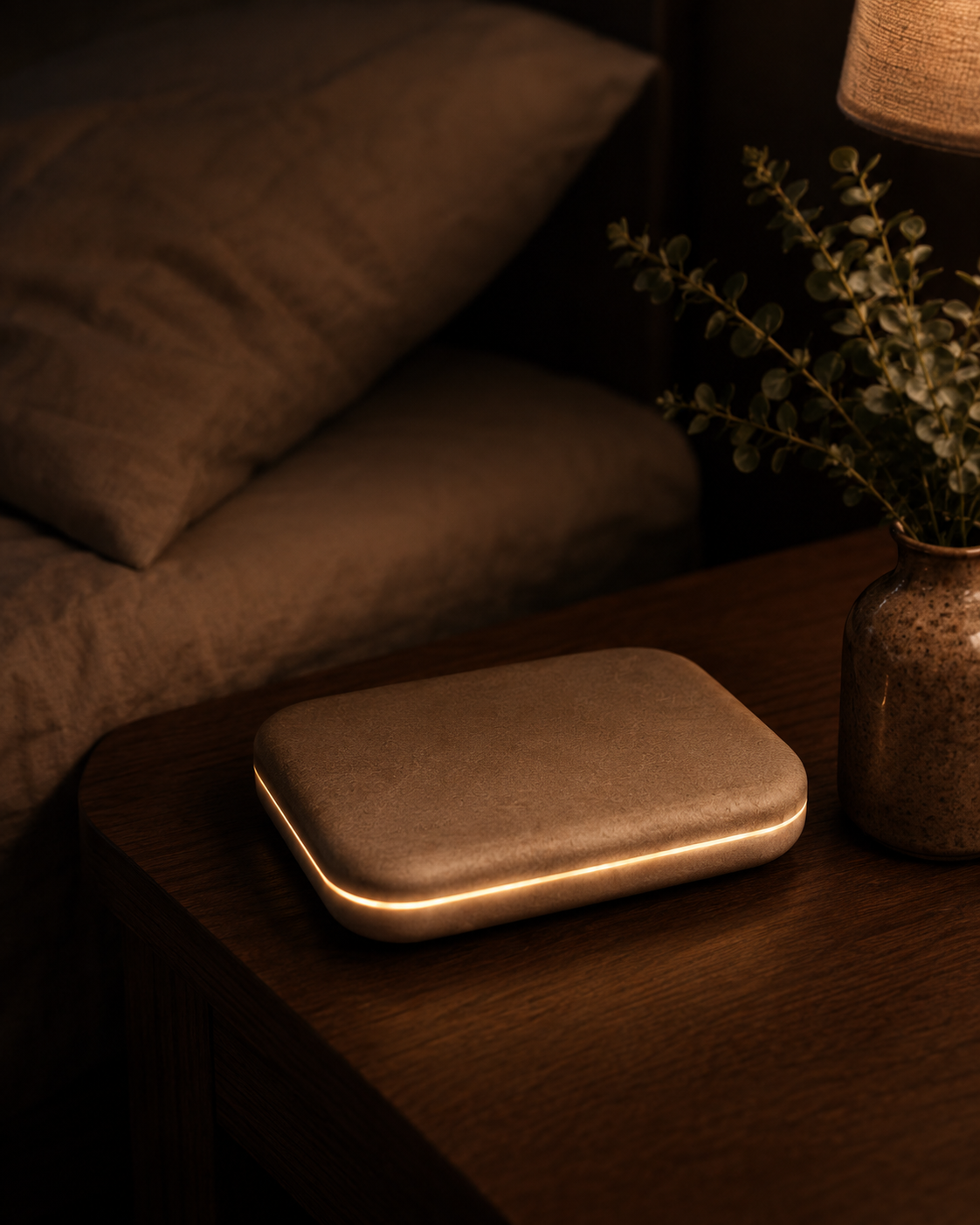
A screen-free bedside object changes surface temperature through the night. Cool means hours of sleep remain, warm means morning is near.
- Strengths
- No sound, no light, no screen. You read the time with one touch, eyes closed, and drift back off.
- Trade-offs
- Prototype stage — it answers 'how much sleep is left', not 'what is the exact minute'.
Best for: People who wake at 3 a.m., reach for the phone, and then cannot get back to sleep.
Silent is good. Screen-free is better.
A vibrating band and a sunrise lamp both solve the noise problem, but neither solves the information problem. When you surface at 3 a.m., what you actually want to know is simple: can I keep sleeping? Reaching for a phone answers it and costs you the rest of the night — the screen light suppresses melatonin and the first notification pulls you fully awake.
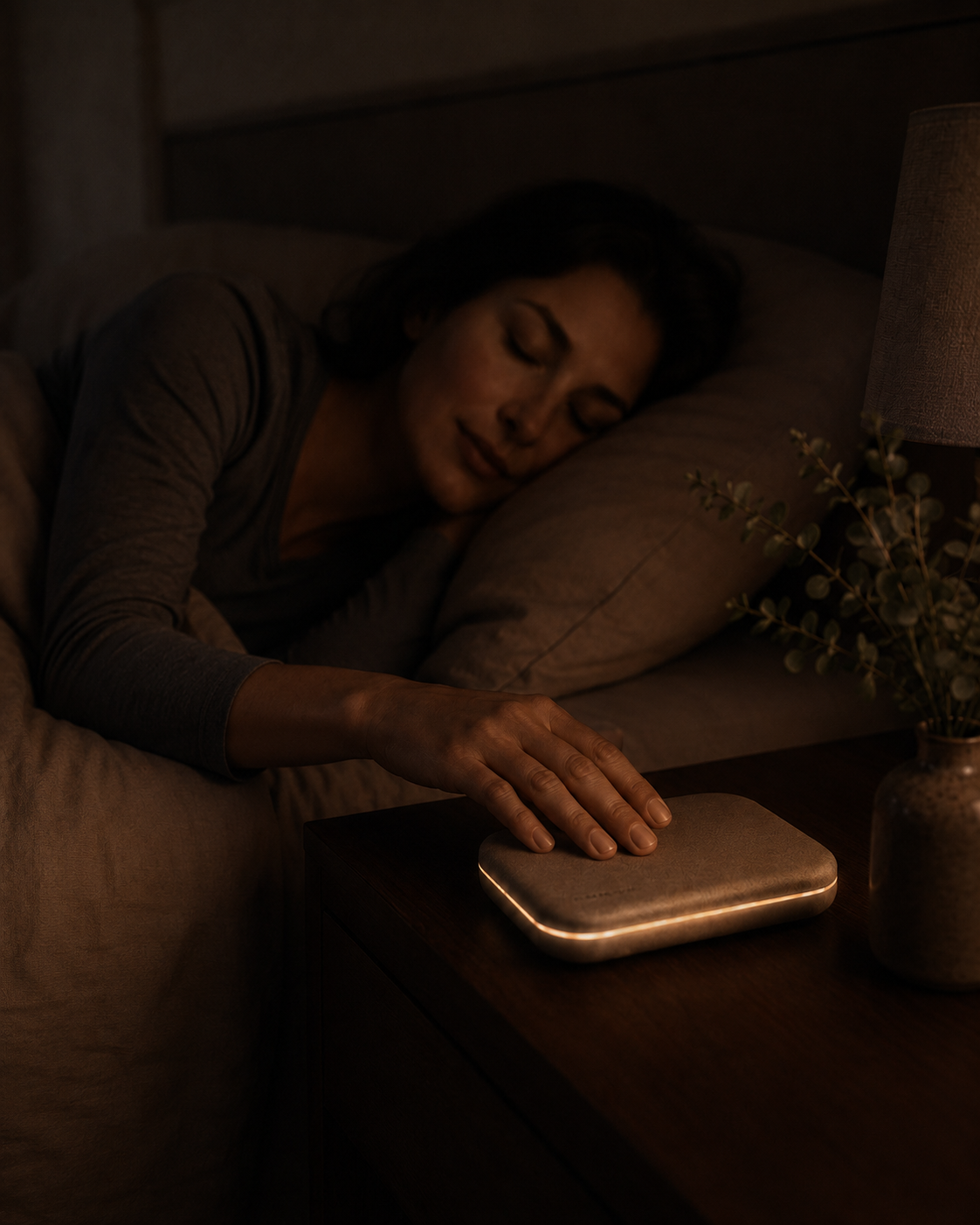
A thermal alarm answers the same question through your hand. SOMNA's matte surface is cool early in the night and warms gradually as morning approaches. One touch, eyes closed, and you know whether to settle back into the pillow. Nothing to wear, nothing to unlock, nothing bright.
How to choose
- You share a bed: a wearable vibrating alarm or a thermal device — both are completely silent for your partner.
- You are hard of hearing: vibration is still the most reliable way to guarantee you wake at a set time.
- Dark mornings drain you: a sunrise lamp is worth it, placed away from your partner's side.
- You wake in the middle of the night: you don't need an alarm at all — you need the time without a screen. That is what SOMNA is for.
FAQ
What is a silent alarm clock?+
A silent alarm clock wakes you without sound. Instead of a buzzer it uses vibration, gradually increasing light, or — in newer sleep-tech — a change in surface temperature you can feel with your hand.
Are silent alarms better for sleep quality?+
Generally yes. A loud alarm can pull you out of deep sleep with a startle response. Silent methods signal more gradually and are much less disruptive to a partner sharing the bed.
What is the best silent alarm for nighttime wake-ups?+
For the 3 a.m. problem — waking up and wondering how long you can still sleep — you need information, not an alarm. A thermal device like SOMNA answers that question by touch, so you never open your eyes or turn on a screen.
Do I need to wear anything?+
Vibrating alarms usually require a wristband or an under-pillow pad. Light and thermal alarms sit on the nightstand and need nothing on your body.